

10 Delegation Tactics for Managers Who Want to Get the Most Out of Their Team
Delegation is a common struggle for managers. Not because they don’t understand the concept, everyone knows they’re supposed to delegate, but because they haven’t built the muscle to do it well. They either hold on too tight, or they let go without any structure, and both approaches cost them the same thing: a team that never grows past what the manager can personally oversee.
Good delegation isn’t about doing less. It’s about building a team that can operate and think without you in the room. It’s about empowering others and developing future leaders. Effective delegation doesn’t just free up your time as a leader, it leads to improved organizational results: Gallup’s research on 143 Inc. 500 CEOs found that leaders with good delegation skills generated 33% more revenue and grew 112 percentage points faster over three years than those who held on too tight.
Here are 10 delegation tactics for managers who want to make that shift.
1. Delegate outcomes, not tasks
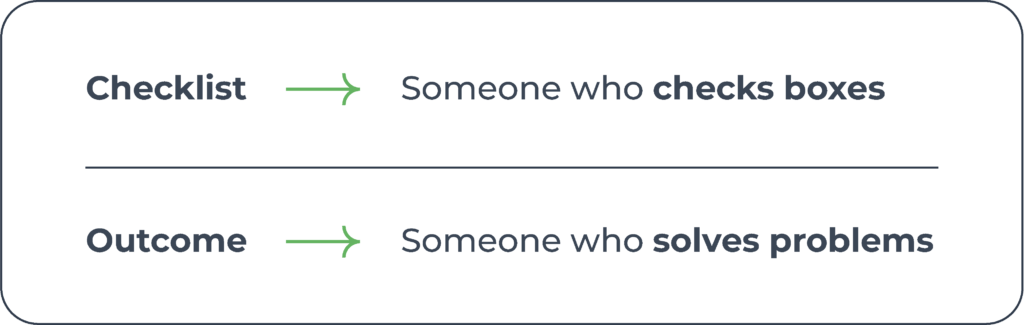
When you hand someone a checklist, you get someone who checks boxes. When you hand someone a clear outcome (what success looks like and why it matters) you get someone who solves problems. Define the destination and let them own the route.
2. Match the task to the person’s growth goals, not just their comfort zone
Delegating only what someone already does well keeps them capable but stagnant. The most effective managers delegate slightly ahead of a person’s current skill level, paired with enough support that the stretch doesn’t become a setback. That’s how capability expands.
3. Set decision-making boundaries up front
Ambiguity here is what creates micromanagement (either yours or theirs) in the form of constant check-ins. Before handing off a project, clarify: What can they decide on their own? What needs your input? What needs your sign-off? Naming these boundaries upfront saves a dozen “just checking” conversations later.
4. Explain the “why,” not just the “what”
When people understand why something matters, to the client, the team, the broader strategy, they make better decisions in the moments you’re not there to guide them. Skipping this step is the fastest way to end up with work that’s technically correct but strategically off.
5. Resist the urge to re-explain your own way of doing it
Delegation isn’t cloning yourself. If you dictate the exact method, you haven’t delegated, you’ve just outsourced your own execution. Give the outcome and the constraints, then let them find their own path to it. Their approach may look different from yours. That’s not a problem to correct; it’s often where better ideas come from.
6. Build in checkpoints, not check-ins
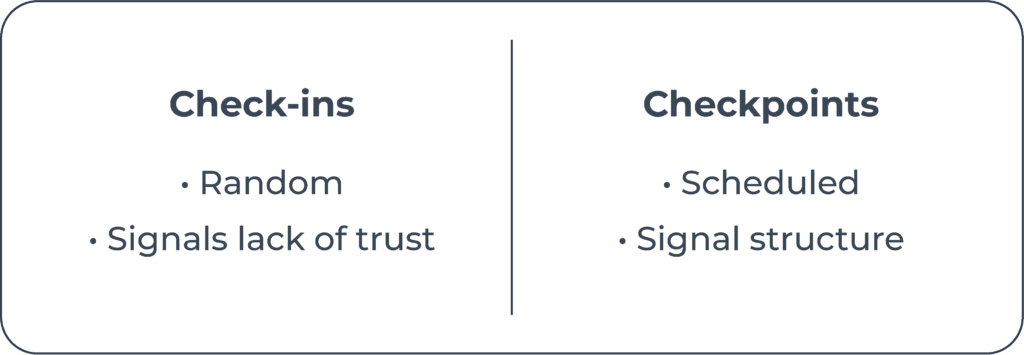
There’s a difference between hovering and having a rhythm. Scheduled, predictable moments to review progress give people room to work independently while still keeping you informed. Random check-ins signal a lack of trust. Scheduled checkpoints signal structure.
7. Make it safe to surface problems early
If people only hear from you when something’s wrong, they’ll learn to hide problems until they’re unavoidable. The same thing can happen if people are criticized or made to feel bad for making mistakes. They’ll become more focused on protecting themselves than on speaking up early. The managers who delegate most successfully are the ones whose teams feel comfortable saying “this isn’t working” in week one, not week six. That safety must be built deliberately. It doesn’t happen on its own.
8. Delegate authority along with responsibility
Handing someone a task while keeping all the authority attached to it is a setup for frustration on both sides. If they’re accountable for an outcome, they need the authority to make the calls that get them there, including the budget, access, or approval to act without routing everything back through you.
9. Let the first attempt be imperfect
The instinct to step in and fix things fast is one of the biggest blockers to developing a team. Recent HBR research points to this exact pattern. Leaders who stay mired in their team’s day-to-day work, even with good intentions, quietly cap their organization’s growth. If you consistently take back delegated work at the first sign of struggle, you teach people that struggling means losing the assignment. Build in room for a rougher first draft, then coach. Don’t just correct.
10. Review the delegation, not just the deliverable
After a project wraps, most managers only evaluate the output. Take it one step further: review how the delegation itself went. Where did the person need more context? Where did they thrive with autonomy? What would you hand off differently next time? This is the step that compounds. It’s what turns delegation from a one-off decision into a repeatable system. Just as importantly, it helps you become a more effective delegator with every project.
The real payoff
None of these tactics are complicated on their own. What makes delegation hard is doing all of them consistently, especially under time pressure, when it’s faster to just do it yourself. But that shortcut has a ceiling. A team that can only execute what you’ve personally handed off, piece by piece, will never outgrow your own bandwidth.
Delegation done well is a leadership multiplier. It’s how a manager’s impact stops being capped by their own hours in the day and starts being measured by the judgment and capabilities of the team they’ve built.
Want help building this into how your leaders operate?
These delegation tactics for managers are a starting point. Real change happens when delegation becomes part of how a leadership team is trained, coached, and held accountable. If you’re curious what that could look like for your organization, book a call. We’ll talk through where your team stands now and what a stronger foundation could look like.