

Every leadership team knows the feeling… the meeting ends, energy feels high, people nod along, someone’s taking notes… You leave convinced that this time, you actually reached alignment. And then… nothing seems to change. A few weeks later, you discover that priorities are still muddled and departments are still pulling in different directions.
It’s like strategy is floating just above the organization. Everyone on the leadership team can see it, but the rest of the company can’t quite grasp it. No one ever seems to land on the same page.
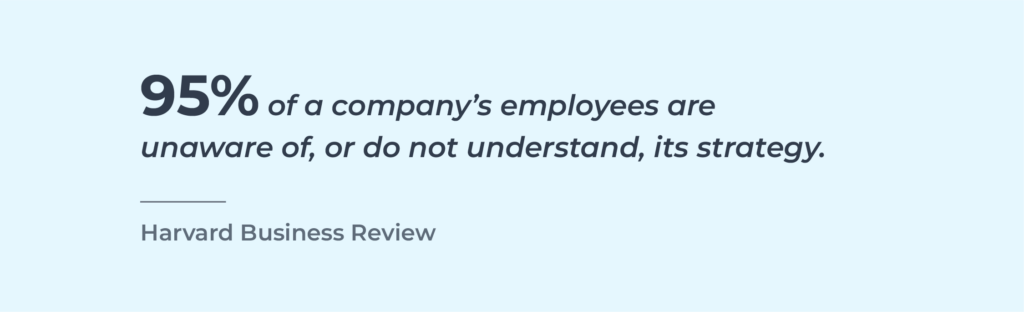
It’s clear many organizations are experiencing a gap between vision and execution. This misalignment is a symptom, and like any symptom, identifying what’s causing it is the first step toward fixing it.

When Strategy Doesn’t Move Past Leadership
We’ve worked with many companies where strategic alignment starts and ends in the boardroom. When company strategy fails to move past the executive team, there are clear signs:
Confusion Instead of Clarity
Team members hear different versions of priorities from different leaders. Does this sound familiar? Department A thinks the focus is speed. Department B thinks it’s innovation. Department C is focused on cost savings. When you ask three different people what the company’s “strategic priority” is, you get three different answers.
Slight Edge: Ask 3 people on different teams what the company’s “strategic priority” is.
Meetings Multiply, Progress Stalls
When strategy isn’t clear at every level, leaders call more meetings, hoping repetition will compensate for lack of understanding. Decisions take longer. People start to qualify goals with “we think” or “we’re trying to…” rather than leading with decisive action.
Work Happens, But Not the Right Work
This one’s a real doozy. You see your team working hard. Plugging away. Putting in late nights. But the company isn’t getting any closer to achieving the goals set by your leadership team. That’s because your team is lacking direction.
It’s easy to fall into the mindset that if work feels busy, progress is happening. But if all that effort is going toward the wrong work, it’s not progress.
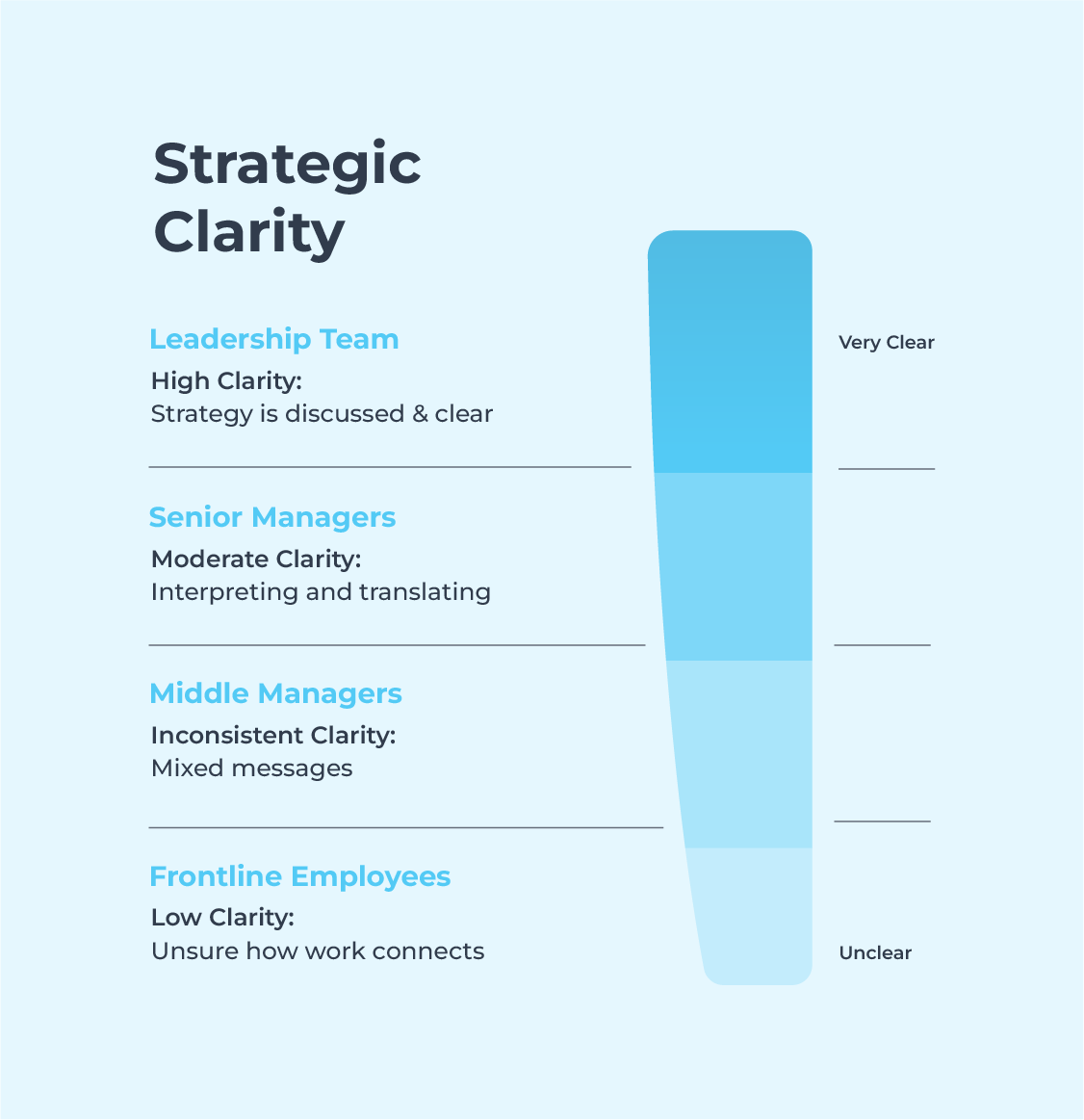
These aren’t just anecdotal symptoms. We see them time and time again, and they’re well documented in organizational research. When employees can’t clearly connect their daily work to strategic priorities, alignment hasn’t fully taken root. And when only a small percentage of employees truly understand the company’s strategy, it’s no surprise that clarity erodes as it moves down the organization.

How to Make Alignment Stick Across the Company
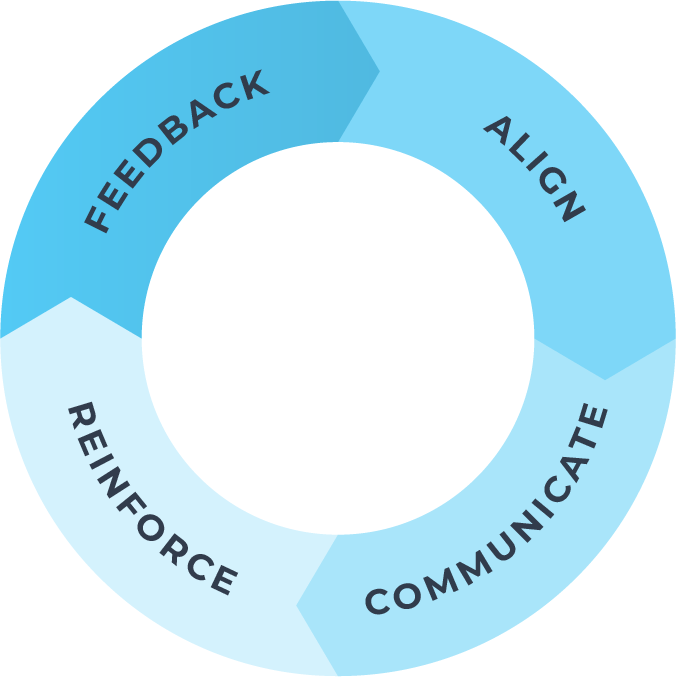
What’s the solution? Stop thinking of strategy and alignment as meeting topics. Turn them into company disciplines. Turn your strategy into practices that are lived out in every corner of your organization.
Here are a few habits we share with our clients:
Translate, Don’t Transmit
It’s not enough to send out a strategy slide deck. Leaders must translate company strategy into department- and individual-level goals.
- Align department goals with company goals
- Use real examples of what success looks like in each department and role
- Equip managers and team leads to answer: “Why does this matter to our team?”
Build Consistent Rhythms
Strategic alignment needs regular reinforcement. It’s not a one-time discussion.
- Include strategy and goal check-ins in weekly team meetings
- Tie strategic priorities into one-on-one conversations
- Connect outcomes to strategic goals in performance reviews
Create feedback loops
Strategy shouldn’t only cascade down from the executive team to individual contributors. Insights need to flow back up. Your front line is often closest to what customers are actually experiencing, and they may have the clearest insight into whether strategic initiatives are working.
- Ask teams what they’re hearing and what barriers they’re encountering
- Use surveys or quick polls to check understanding
- Adjust messaging based on what people are experiencing
Perfection isn’t the goal. What matters most is learning and adapting.

The Impact of Alignment
When we think about alignment, productivity and execution usually come to mind. And for good reason. Getting everyone on the same page absolutely improves the quality and quantity of work being done. But alignment runs deeper than that. When true alignment exists, team health reaches a new level.
Greater Trust
Transparency, a major factor in alignment, builds psychological safety. When leaders take the time to show employees what decisions are being made and why, trust skyrockets. It becomes a lot easier to fully buy-in to a leadership team and a company you trust. And higher buy-in creates a ripple of effect in team health.
Stronger Engagement and Retention
Employees want to contribute to something meaningful. When strategy feels abstract and distant, the connection between individual work and the company’s vision fades, and engagement drifts.
By making strategy visible, relatable, and connected to daily work, people feel part of the outcome. According to McKinsey, 70% of employees say their sense of purpose is defined by their work. As a leader, it’s your responsibility to enable that connection.
Organizations with strong strategic alignment consistently report higher employee engagement and agility, and they make faster, better decisions that lead to measurable business outcomes.
Read more about the correlation between strategic alignment and employee engagement: The Neuroscience of leading with Vision
You won’t find this kind of alignment by accident. If you want to see alignment extend beyond leadership meetings, start by:
- Translating strategic goals into department and individual priorities
- Creating a rhythm to consistently and thoughtfully communicate strategy
- Ensuring employees have channels and time to provide feedback
- Building transparency into leadership practices
Make these practices part of your leadership habits, and watch your strategy become a living, breathing part of how work gets done.
Ready to stop grasping and finally grab ahold of strategic alignment?
Take our FREE Alignment Assessment and receive a detailed diagnostic of your organization’s:
- Strengths
- Growth opportunities
- Hidden patterns impacting performance and consistency
This comes with a complimentary diagnostic review with a Leadership Resources expert. We’ll walk you through your results, answer questions, and help identify practical next steps!