

Organizations frequently treat leadership development and strategy as separate priorities: soft skills versus business outcomes. But in practice, they are deeply interconnected. Emotional intelligence (EQ) is one of the most overlooked drivers of organizational alignment, and, ultimately, successful execution.
Over the past several months, we’ve explored alignment from multiple angles: strategic clarity, team health, leadership effectiveness, and cultural cohesion. And one theme continues to surface. Organizations cannot sustain alignment without emotionally intelligent leadership.
How can you successfully execute a strategic plan without EQ? Quite frankly, you can’t. The most well-designed goals, KPIs, and initiatives will fall short without shared priorities, trust, and consistent communication. These aren’t byproducts of strategy but rather outcomes of leadership behavior. That’s why EQ is critical.
Research shows that emotional intelligence accounts for 58% of job performance and is present in 90% of top performers (wifitalents.com). Leaders with high EQ see up to a 20% increase in team performance, which directly translates into stronger organizational alignment (wifitalents.com).
Below are 7 reasons to invest in emotional intelligence.
1. Self-awareness reduces strategic drift
Clarity is essential for alignment. Leaders who lack self-awareness often communicate inconsistently, creating confusion around priorities and expectations.
Self-aware leaders understand how their communication style, emotional responses, and decision-making patterns impact their team. This awareness enables them to communicate with precision and consistency, both critical for aligning teams around a shared vision.

Business impact: Reduced miscommunication, clearer priorities, and fewer execution delays.
Actionable tip: Build a regular reflection habit. At the end of each day or key meeting, ask:
- What did I communicate clearly?
- Where might I have create confusion?
- How can I adjust my communication style so it lands better?
2. Empathy aligns teams around shared goals
In addition to understanding yourself, you need to understand others.
By understanding your teams’ motivations, you can better connect their work to your organization’s goals. This fosters real commitment and buy-in. People begin moving in the same direction because they want to, not because they have to.
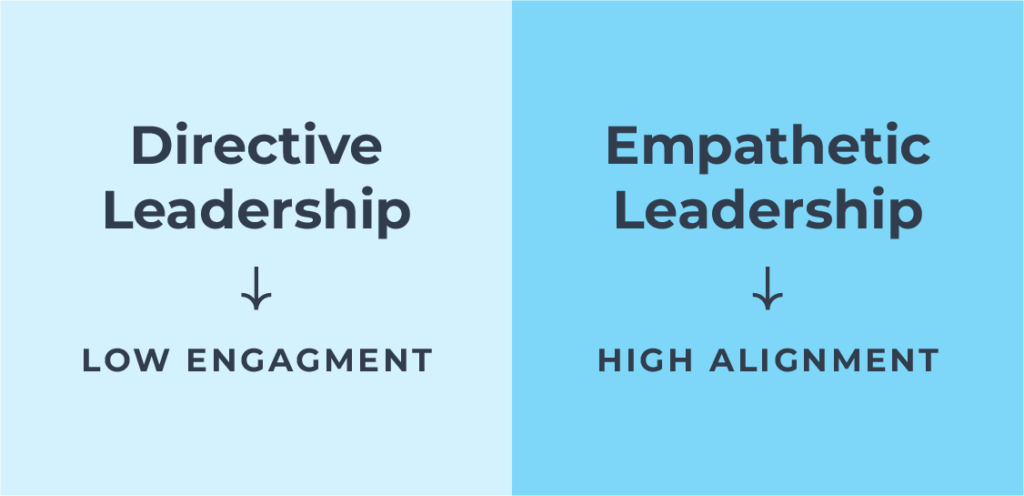
Business impact: Higher engagement, stronger ownership, and improved team performance.
Actionable tip: In your next 1-on-1, ask:
- What drives you?
- What’s getting in the way of your success right now?
- How can I better support your priorities?
Learn more about 1-on-1’s from our coach and advisor, Kathy Bourque.
3. Emotional regulation prevents misalignment under pressures
Creating alignment would be much easier if business were smooth sailing 100% of the time. Strategy rollout, execution, and follow-up all seem straightforward when things are calm and predictable. But in reality, business brings pressure. And often a great deal of it.
Without emotional regulation, leaders may react impulsively, make inconsistent decisions, or communicate in ways that create friction. But leaders who manage their emotions effectively provide stability during high-stress situations. This consistency reinforces trust and keeps teams focused on shared objectives.
Business impact: More consistent decision-making, reduced disruption, and stronger execution under pressure.
Actionable tip: Introduce a “pause practice” in leadership meetings:
- Pause before responding to tension
- Ask: “What outcome do we want here?”
4. Social awareness strengthens cross-team alignment
Alignment within a team is only part of the equation. Organizations succeed when alignment extends across functions.
Social awareness, a key component of EQ, allows leaders to read team dynamics, anticipate friction points, and identify misalignment early on. When this skill is missing, silos can quickly form.
Business impact: Improved cross-functional collaboration and fewer competing priorities.
Actionable tip:
- During cross-functional meetings, ask:
- “Where might our priorities be competing?”
- “What does success look like for each team?”
5. Strong communication turns strategy into action
Strategy only creates value when it is understood and acted upon. Emotionally intelligent leaders adapt their communication to ensure clarity across different audiences and contexts.
This includes reinforcing priorities consistently, communicating changes transparently, and ensuring alignment across all channels.
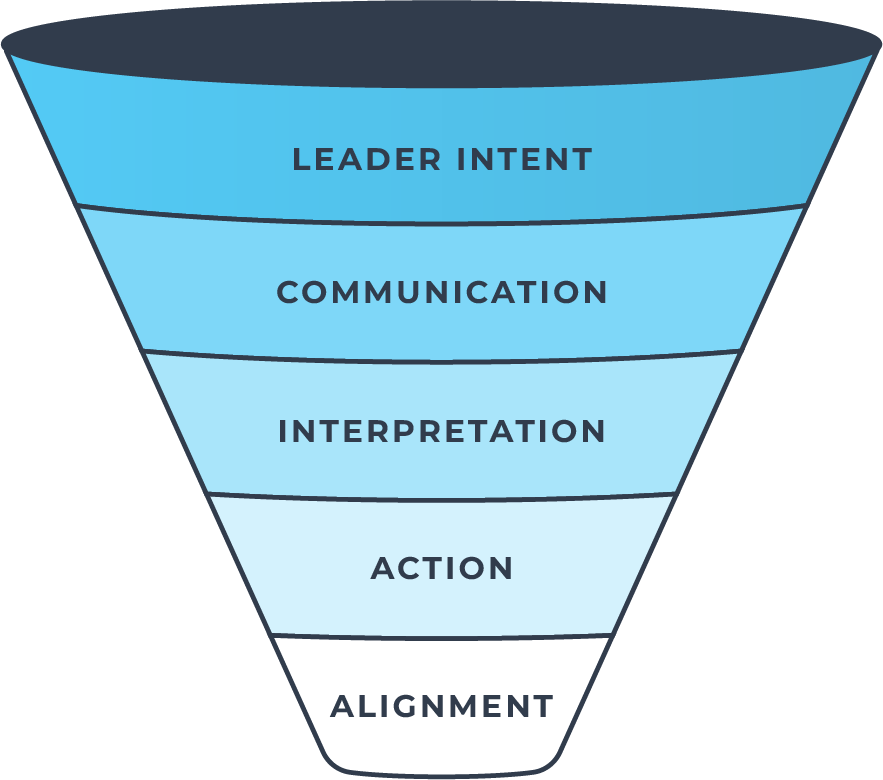
Business impact: Faster execution, fewer misunderstandings, and stronger alignment across all levels of the organization.
Actionable tip:
- Communicate priorities across multiple channels:
- Team meetings
- 1-on-1s
- Written follow-ups
- Ask: “What did you hear as the priority?”
6. Trust accelerates execution and reduces friction
Trust is at the very core of alignment. Without it, even the most capable teams will struggle to move quickly and cohesively.
Trust is built by consistently exhibiting emotional intelligence: empathy, transparency, and integrity. Meeting your people where they’re at, being truthful and genuine, and doing the right thing even when it’s difficult. That’s the type of leadership that creates environments where teams can operate with confidence.
Business impact: Faster decision-making, reduced friction, and higher retention.
Actionable tip:
- Normalize transparency:
- Share the “why” behind decisions
- Admit when you don’t have all the answers
7. Emotional intelligence creates a culture where alignment sustains itself
The ultimate goal is that your company fosters a culture and environment that sustains alignment.
An organization where emotional intelligence is embedded in every department, team, and contributor. This looks like collaborating effectively, navigating conflict productively, and remaining focused on shared priorities. Without constant oversight.
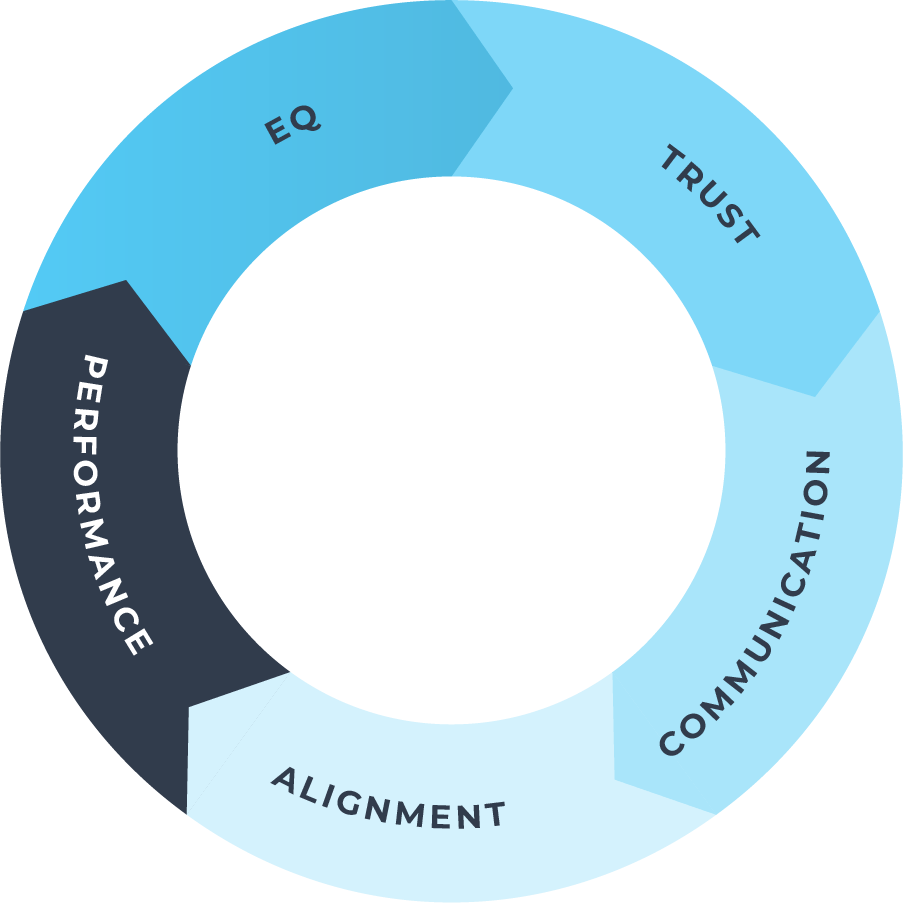
Business impact: Scalable alignment, stronger culture, and long-term organizational effectiveness.
Actionable tip:
- Invest in EQ development at all levels—not just leadership
- Incorporate EQ into:
- Hiring
- Performance reviews
- Leadership development programs
Final thoughts
Emotional intelligence is much more than a “nice-to-have” leadership trait. It is a key driver of organization alignment.
Organizations that prioritize EQ are better equipped to create clarity, build trust, and maintain alignment across teams. And alignment is what ultimately determines whether strategy is executed effectively.
Take the next steps
If this sparked your interest and you want to learn more about emotional intelligence:
If you’re ready to evaluate alignment across your organization:
You’ll receive a diagnostic overview of your organization’s alignment along with the opportunity to review your results with a Leadership Resources representative.